Showing posts with label Rebecca. Show all posts

Saturday, November 22, 2008

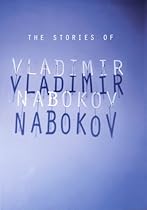
Stories by Vladimir Nabokov


In his stories, Vladimir Nabokov so perfectly captures a character, or a setting, or an emotion, that I feel that the character is real, the setting surrounds me, and the emotion is my own.

His writing in these stories is so well done that I, a very amateur writer, feel the urge to try my hand at capturing the images around me, a task I will surely fail because I know I will never even remotely measure up to Nabokov’s incredible talent.

The unfortunate aspect of reading more than 60 of Nabokov’s short stories in one month is that the characters he so adroitly creates, the settings he so carefully draws, and the feelings he so perfectly captures are, for the most part, miserable, gloomy, and ultimately depressing. Also, some of his stories have fantastical elements that failed to resonate with me, and most dwell on negative aspects of human nature - subjects that weren’t pleasant for reading in bulk.

But I feel that the overall quality of Vladimir Nabokov’s writing is so extraordinary that he should be read simply for the marvelous experience that comes from reading his words, even if the reader doesn’t necessarily consider the negative underlying themes amazing.

Nabokov’s stories tend to be rather sad. My two favorite stories happened to be the least unpleasant. A number of other stories have also stayed with me.

Two Stories

In “First Love,” a man reflects on his first love. In the course of his description of a childhood summer’s events, it’s unclear to the reader whether his first love was traveling by overnight train; swimming at the beach; learning about butterflies; or meeting the little French girl, Colette. This story doesn’t have much plot or grand finale, but it is a beautiful story that I’ve already reread three times.

In “The Vane Sisters” story, a man reflects on his relationships with two sisters, one of whom was once his girlfriend. It also is incredibly subtle. (Highlight to read spoiler.) Nabokov’s subtle ending tells us that this man’s life really hasn’t been all that affected by the life and then the death of these sisters. It’s kind of depressing for the sisters, but an interesting realization for the man. It made me think about my own life and relationships. What impact do certain people have on me? For example, how often do I think about old boyfriends? Did they really impact my life significantly?

Other Stories

While I can only see myself rereading those two stories, there are a number of other stories that I keep remembering, even after starting the next story. Note that I do think Nabokov’s writing improved through the years; if you read the 60+ story volume as I did, start in the middle or go backward.

Here are some that stayed with me, with short introductions.

  • That in Aleppo Once…” His wife never existed, he’s sure of it.
  • A Forgotten Poet.” A dead poet arrives at the banquet held in his honor.
  • A Guide to Berlin.” One man recounts the small details of Berlin.
  • Music.” At a recital, a man sees his ex-wife across the room.
  • Perfection.” A very proper tutor is asked to take his young charge to the sea shore.
  • The Visit to the Museum.” A man goes to a museum to acquire a painting for a friend - and gets lost inside.
  • An Affair of Honor.” A man finds that his wife is having an affair with his friend, an ex-cavalry man, and he must fight a duel to save his good honor.
  • A Slice of Life.” The woman once loved him; now that his wife has left him, he has come to her to get drunk and commiserate.
  • The Dragon.” A dragon awakes after his ten-century slumber.
  • The Fight.” The elderly man he sees at the beach is also the bartender; he observes one night’s bar fight.
  • The Potato Elf.” A small dwarf in the circus seeks love.
  • Terra Incognita.” A group of bug collectors in the tropics get sick, lost, and angry at one another, as told from the perspective of the ill, delirious man.
  • The Reunion.” Two brothers, one living in Russia and one an émigré in Germany, meet after ten years.
  • Breaking the News.” The elderly, deaf woman’s son has died, and no one wants to tell her.
  • Cloud, Castle, Lake.” A man is forced into his first vacation, and he’s hoping that he’ll find the elusive happiness he seeks.
  • The Thunderstorm.” A man awakens in a storm to see Elijah dropping his mantle for Elisha.
I highly recommend reading at least one or two stories by Nabokov. His writing is amazing!

Cross-posted, with more detailed thoughts on his writing, at Rebecca Reads

Wednesday, November 5, 2008

Stories by Nathaniel Hawthorne

To my delight, many of Nathaniel Hawthorne’s stories perfectly fit the “gothic” theme of Halloween in a style that I loved. Even though I dislike being “scared,” these stories were again the perfect amount of creepy for me.

One of Hawthorne’s collections of stories is called Twice-Told Tales. As I read, I began to understand why: while many stories are on the surface about Puritans in the early days of America, they aren’t really about Puritans. Hawthorne is telling us a different story. (Links below are to the stories in the public domain.)

For example, in Hawthorne’s probably most well-known story, “Young Goodman Brown,” the titular character is invited by the devil to practice witchcraft one night. To his surprise, the people he sees with the devil are his own religious teachers and leaders. But what we read is only a part of the story. The “tale” is told again when we realize the symbolism: even those striving to lead are hypocrites full of error.

Other stories likewise have a “ghostly,” Halloween-ish feel to them. For example, in “Rappaccini’s Daughter,” the woman is literally poisonous. In “The Snow-Image,” two children make a snow person come alive; I loved this “Frosty the Snowman” precursor. Similarly, in “Feathertop,” a witch brings her scarecrow to life. In”Lady Eleanore’s Mantle,” a woman’s coat becomes the carrier of a plague of sorts. In “Ethan Brand,” the titular character has sold his soul to the devil. I think these would be perfect for a ghostly but not scary Halloween read! I think “Feathertop” and “The Snow-Image” would also be appropriate for children.

While not all of Hawthorne’s stories are gothic, all of them have subtle meanings. Some people may not like Hawthorne’s blatant messages in his stories, but I thought his stories were also entertaining stories.

Probably my favorite non-ghostly story is “The Great Stone Face.” In this story, a small rural community is looking for the fulfillment of the legend: a person whose countenance appears the same as the face on the local hillside. This person will bring honor to the community. Over the course of a lifetime, they find the image of the stone face in a rich entrepreneur, a war hero, and a poet, all of whom end up failing the community. I loved the message of this story: that we can make a difference to others without doing something grand, and humility is always better than pride.

Further, in “The Birth-mark,”a husband wants his wonderful wife to undergo his experimental surgery to remove a birthmark from her face that he thinks is the hand print of the devil; but it’s not the hand of devil. A young man enters Boston in “My Kinsman, Major Molineux” looking for his relative to help him get started in the world; but his relative doesn’t have time for him. In “The Great Carbuncle” a group of people are searching for a huge, precious jewel, each for their own reasons — to their ultimate downfall. Finally, in “The Wives of the Dead,” two sisters find out on the same day that their husbands have died. I won’t tell you what happens, but it is “touching” in the end.

There were other, well-known stories that I read and didn’t like very much. I think I disliked the slow pace and the lack of engagement I felt with any particular character.

In the end, Hawthorne has a style of his own. He is almost a favorite for me, after Maupassant and Chekhov.

Cross-posted here.

Tuesday, November 4, 2008

Stories by Flannery O'Connor

To understand Flannery O’Connor’s short stories is understand the rural South that she was familiar with in the pre-1970s. Her stories focus on aspects character in human, every-day situations all revolving around her South, dealing with race relations, Christianity, rural versus city living, parent-child relationships, etc. She brings the reader into the settings by capturing thought processes, a style I found engaging. I enjoyed reading her stories, although they illustrated a lack of hope in human nature.

Themes

Race and Class

I found the most common theme in Flannery O’Connor’s stories is race and class, looking at conflict between generations. A great example is “Everything that Rises Must Converge.” In this story, a progressive young man must ride the bus with his older mother to the YMCA because she is “afraid” of the blacks on the integrated buses. He wants to teach her a lesson, but in the end he realizes he still needs his mother, as “old-fashioned” as she is.

Race and class often mix in O’Connor’s stories. In “Revelation,” a self-satisfied judgmental woman is baffled when a young girl calls her a rude name; in the end, she (maybe) realizes the folly of her judgments.

Other stories clearly dealing with race and class also include rural versus city conflicts. Some of these stories are “The Artificial Nigger” (a father and son visit Atlanta); “The Displaced Person” (a Jewish refugee family joins the farm); “A Late Encounter With the Enemy” (Grandpa fought in the civil war); and “The Geranium” and “Judgment Day” (an old man, living in New York City with his daughter, longs to return to the South to die; these are essentially the same story, one written at the beginning and one at the end of O’Connor’s career).

Isolated, Lonely People

Some of my favorite stories were about lonely, isolated individuals seeking for a place. In “The Crop,” a lonely woman sits down to write a short story-and forgets where she is. I love this story because I can relate to this writer: she can’t figure out how to get the story from her head to paper. In “A Stroke of Good Fortune,” the woman ponders a fortune teller’s message, and the reader, following her thoughts, knows what it is. I loved how clueless she was as I followed her thought process.

While others weren’t favorites, they were also about lonely, isolated people: “You Can’t Be Any Poorer Than Dead” (14-year-old must bury his grandfather); “Good Country People” (a lonely girl with a wooden leg finally trusts someone, the good country man selling bibles); “The Life You Save May Be Your Own” (mother gets her mute daughter married to a nice, good country man); “A View of the Woods” (a lonely, selfish grandfather idolizes his granddaughter); and “The Enduring Chill” (a lonely, unsuccessful writer returns to Georgia to die).

Christianity (Good versus Evil)

Flannery O’Connor’s stories also deal with Christianity and good versus evil in general. Her view of good and evil in the face of Christianity is intriguing.

A Good Man is Hard to Find” is probably the most familiar O’Connor story, but I really don’t like it. Grandma gets her family lost on a side road. They meet a murderer, who Grandma is sure she recognizes as a good man. I think it’s a look at how everyone has good, and yet, we’re all missing good too; we’re all condemned. I find it a bit disturbing.

In other stories, people try to save each other through religion and because of religious training. In “The River,” the boy’s caretaker, Mrs. Conin, wants to “save” him with religion. In “Parker’s Back,” Parker gets one more tattoo that he thinks his religious wife will appreciate. In “The Comforts of Home,” Thomas’s mother thinks she can save a loose woman from corruption. In “The Lame Shall Enter First,” Sheppard thinks he can redeem a criminal boy who shows more promise than his own son.

I sometimes didn’t like the violent shock at the end of each story: but that may be because I was reading all of her short stories in the same week. If you read Flannery O’Connor, read her in installments.

In the end, Flannery O’Connor certainly has a marvelous but morbid story telling ability.

Cross-posted in longer form here.

Monday, November 3, 2008

Stories by Washington Irving

Washington Irving’s ghost stories are just my type of ghost story: they’re tricky and creepy, but full of twists. Irving’s twists are rather predictable, but I found that even with Irving’s long-winded, wordy, early-1800s prose made his stories delightful to read.

In the introduction to my 1960’s book, Washington Irving is called the “Father of American Literature” and the “First American Man of Letters.” While I don’t know enough about his contemporaries to know if that’s accurate, I do know that many of his stories have a distinct American feel to them, as the setting is clearly the “new world.” The rustic and spacious American setting feels refreshing when I approach Irving’s writing; it’s as if that rural Connecticut community still exists. It also seems Irving’s world has seeped down into our modern culture: how many American communities today have a Sleepy Hollow street, neighborhood, or town somewhere near?

“The Legend of Sleepy Hollow,” probably Irving’s most well-known story, illustrates a quaint, rural, new American community. Sleepy Hollow is “sleepy,” but it does have one claim to fame: the local haunt, the headless horseman. In the story, scrawny Ichabod Crane and burly Brom Bones vie for the attentions of the local beauty, and the headless horseman visits Ichabod Crane late one night. As I said, Irving’s story is predictable, but I still enjoyed it.

“Rip Van Winkle” occurs in a similar community. Rip Van Winkle is a good-for-nothing married to a nagging woman. One night, he meets some gnomes in the wood, who offer him alcoholic refreshment. When he wakes up the next morning, something isn’t quite right. Again, this is a somewhat predictable story, but I still enjoyed it, odd as it was.

“The Specter Bridegroom,” on the other hand, takes place in a castle in Germany, where a bride is awaiting her groom for their wedding. Though he arrives in time, he insists on leaving before the wedding, for he has a date with the grave. I was annoyed with Irving for giving up the ending a few pages too soon; I suspect it would never have been published that way today, and I thought it could have used some reorganization. That said, I still enjoyed the amusing story.

“The Adventure of the German Student” also occured in Europe, this time in creepy Revolutionary Paris, a place with ghosts, apparently.

“The Devil and Tom Walker” returns to the New England setting. This time, another good-for-nothing man married to another nagging wife (seems to be a theme in Irving) happens upon the Devil in the wood and strikes a bargain with him. Lest you might be thinking of doing the same thing, you should read this warning-story! Tom’s ultimate end is quite amusing.

I did read a few other stories, but these were the most entertaining. Irving’s style is not for everyone: as I said before, he is very wordy and tends to detail everything. I liked that, but you might not.

These stories happened to be Irving’s most “gothic.” I don’t normally like ghost stories, but these were just to my liking: a somewhat real feel to them, and yet also a somewhat “fantastic” story behind them.

Cross-posted here.

Saturday, October 11, 2008

Stories by O. Henry

O. Henry (real name William Sydney Porter) in ...Image via Wikipedia
I found O. Henry's stories to be refreshingly delightful, poignant, and easy to read. While I didn't find O. Henry's actual writing beautiful in comparison to others, in the end, though, I think everyone should read some of O. Henry's stories: they are enjoyable and worthwhile.

Friday, October 10, 2008

Stories by Ernest Hemingway

Author Ernest Hemingway in 1939.  During World...Image via Wikipedia

Hemingway's stories are poetry: that is my first and lasting impression of Ernest Hemingway's short stories. In his short stories, Hemingway treats words as sparsely as do poets.

I don't usually understand or enjoy poetry because it feels so much must be inferred or interpreted. While reading Ernest Hemingway's stories, I likewise felt the need to infer and interpret beyond my comfort zone: I didn't "get" them and I certainly didn't enjoy reading the few stories I read. While I've only read a dozen of Ernest Hemingway's short stories, I'm finished.

That, however, doesn't mean you should avoid Hemingway's stories: they may resonate with you, and you may love his writing style. He does a magnificent job of capturing a scene through dialog. Hemingway is worth reading.

Saturday, September 13, 2008

Dubliners by James Joyce

In Dubliners, his collection of short stories, James Joyce captures Irish life, specifically the lives of Dubliners. Each story is a magnificent sketch of the people, setting, and situations; the entire collection presents a variety of such sketches. At the end of each sketch, I felt the despair that I believe Joyce intended to impart in each normal life situation. While each story captures different characters in a various stages of life, similar despair pervades each of their lives in related settings.

Friday, August 29, 2008

Stories by Guy de Maupassant

Guy de MaupassantImage via Wikipedia If Guy de Maupassant lived and wrote stories or novels today, his name would appear on The New York Times best-seller lists many weeks out of a year.

As it was, in the late 1800s, his stories were best-sellers from the time the first one, “Boule de Suif,” appeared in a collection with five other previously unknown authors, until he died, mentally ill, at the young age of 42 in 1893.

Maupassant’s stories are beautifully written. Maupassant’s writing style is concise, and he relies on dialogue, so his stories move quickly. He captures the essence of the setting in few words and makes it complete.

But that’s not all that made him a best-seller. Maupassant wrote with under-lying carnal desires in mind. In other words, he wrote about sex, greed, love, misunderstandings, and lying, among other things. The characters in his stories care most about themselves. What makes his stories resonate with the modern reader is the attraction to our own natural wants.

His stories capture greed (a woman wanting to look elegant for a party, no matter the cost; a man in need of money selling his wife; a parent in need of money selling his child; etc.), self-interest (a young man escaping from his pregnant girlfriend; society shunning prostitutes while yet accepting them; a family having the funeral before the loved one died for convenience), desire for power (a man lusting after a woman; a man trying to politically overtake a city), and so forth.

For a specific example, in “The Devil,” Maupassant captures our natural impatience. The son of a dying woman needs to plant his crop, so he hires a peasant woman to sit with his dying mother. But as the hired woman has been hired for a set pay, she doesn’t feel like waiting for the woman to die. I won’t tell you how this is resolved, but I will tell you I laughed out loud, horrid as it was! Humans are impatient by nature, and Maupassant wonderfully captured us.

I’ve now read between 80 and 100 stories (probably about 400 pages, skipping around the huge volume of Maupassant’s complete stories that I have). I think I’ve had a good taste of Maupassant’s great stories. I’m sure there are other great ones out there. Tell me if I missed your favorite! (Links below are to the stories on the web; all are in the public domain.)

Stories I Would Reread

  • The Necklace: A middle-class woman really wants to look nice at a social gathering so she borrows a diamond necklace from her friend….and loses it.
  • The Piece of String: A stingy man finds a piece of string in the middle of the town square and stops to pick it up, changing his life.
  • The False Gems: When his beloved wife dies, the man eventually must sell her cherished-but-false jewels.
  • The Horla: An invisible creature follows a man, driving him crazy.
  • Was it a Dream?: A man’s beloved wife died, and he morns over her grave, only to be “haunted.”
  • The Father: A man abandons his girlfriend once she becomes pregnant; only later does he realize what that meant for him.
  • The Devil: A peasant woman is hired to sit with a dying woman and gets impatient for her to die.
  • A Sale: Why did he dump his wife in a barrel of water? The judge wants to know.
  • Simon’s Papa: Simon doesn’t have a papa, and the boys in the school yard are making fun of him. He is determined to find a papa.
  • Clair de Lune: A priest hates women because they are only temptresses, and nothing good can come from women. And then he learns something.

Other Good Stories

  • Boule de Suif: A group of citizens, including Boule de Suif (a local prostitute), travel in a carriage together during a heavy snowstorm in the midst of the Franco-Prussian war.
  • Yvette: Yvette is the daughter of a high-class prostitute, but she wants to find love and marriage in her life. (I cannot find this online; the Yvette story credited to Maupassant that I find online is different!)
  • Mouche – A Boating Man’s Reminiscence: Mouche is the only woman on the boating crew and they all love her.
  • A Family: A bachelor visits a long-unvisited friend whose life now “disgusts” him (he has a wife and children and certainly must be miserable).
  • Moonlight: A woman has the beginning of an affair.
  • In the Wood: A couple is discovered making love in a forest…
  • The Kiss: An old aunt sends a young girl a letter about why kisses are so important.

In the end, Maupassant’s stories feel modern in writing style and subject matter. Therefore, you may relate to them even though they took place in a setting 100+ years past.

In searching for a recommended translation, I stumbled upon an Amazon reviewer who wasn’t too impressed with Maupassant. He/she says:

The real reason that everyone makes such a big deal about Maupassant is because he mostly wrote about sex. His stories are entertaining but not extraordinary…

He’s right, and he’s wrong. Yes, Maupassant mostly wrote about sex or similar things. But I believe that Maupassant’s writing has a hint of extraordinary. Some stories are simply masterpieces. I guess you could say that Maupassant is the average “Guy.” That helped him become the best-seller he deservedly was.

What are you waiting for? Many Maupassant stories are very short. Read some of his stories online right now (links to specific stories above):

Posted in slightly different form here and here on Rebecca Reads.

Monday, July 21, 2008

Stories by Anton Chekhov

I loved reading Chekhov's stories. I read a volume of them, translated by Richard Pevear and Larissa Volokhonsky, as well as "The Kiss," which was recommended and unfortunately wasn't included in the volume translated by Pevear and Volokhonsky.

My favorite stories tended to be the shorter ones that focused on one character or one couple. They each had a sad, poignant ending, and yet I loved the beauty in them. Chekhov didn't try to say too much in each story, and I finished each one with a sigh, wanting to let my emotions simmer before I went on to the next story. Many of them reminded me that life is challenging and full of depressing things, and yet we all still go on day by day. Explaining Chekhov in those words makes his stories sound depressing, and they were in a sense, but overall, they were beautiful at the same time.

The Student by Anton Chekhov

Anton Chekhov's "The Student" is the perfect story.

Decide for yourself by reading it at Project Gutenberg (1,500 words) or listening to it at LibriVox (10 minutes). Note that I read a new translation by Richard Pevear and Larissa Volokhonsky.

Here are some elements that make it perfect for me.

Wednesday, July 9, 2008

Rebecca's Short Story List

I am at the beginning of my own little challenge on my blog Rebecca Reads in which I’m going to read the following classic short stories:
  • Anton Chekhov
    • “The Kiss”
    • “The Student”
    • “The Lady with the Dog”
  • Guy de Maupassant
    • “Madame Tellier’s Establishment”
    • “The Horla”
  • Ernest Hemingway
    • “Hills Like White Elephants”
    • “God Rest You Merry, Gentlemen”
    • “The Snows of Kilimanjaro”
    • “A Sea Change”
  • Flannery O’Connor
    • “A Good Man Is Hard to Find”
    • “Good Country People”
    • “A View of the Woods”
  • Vladimir Nabokov
    • “The Vane Sisters”
  • Jorge Luis Borges
    • “Tlön, Ugbar, Orbis Tertius”
  • Tommaso Landolfi
    • “Gogol’s Wife”
  • Italo Calvino
    • Invisible Cities

While that is only eight writers, I’ll either come here and post about the particular story or about the entire collection (depending on how much I liked those stories, I may or may not read more by the author). I'll try to visit at least ten times before the end of the year!

Anyway, there’s my list, and I’ll be back soon to tell you about Chekhov (so far I’m liking his stories very much!).