Friday, September 24, 2010

The First Person and Other Stories - Ali Smith


A fresh collection of short stories from Ali Smith. The first story was definitely my favourite and looked at the form of short stories set with a cancer patient as the backdrop. There is a new expensive drug that could help lots of women, but as it’s expensive is not readily prescribed by doctors. The other one that really stood out was what happens when a woman is shopping in a supermarket and when she turns back to her trolley there is a toddler in it who calls her Mummy and everyone assumes is hers. I love how she deals with the situation.

I like how most of the stories feel like they could actually have happened in Smith’s real life. She is excellent at blending reality with fantasy. Unfortunately they didn’t grab me as much of some of her other collections and stories so I wouldn’t recommend this for your first dip into Ali Smith’s world.

Wednesday, August 18, 2010

Fragile Things - Neil Gaiman


A collection of short stories, a follow up to Smoke and Mirrors, by acclaimed Fantasy author Neil Gaiman. I won’t go through each story, just the ones that I particularly enjoyed. The first was A Study in Emerald that matches Sherlock Holmes with Cthulhu myths. Everything is twisted around in this excellent detective story. How to talk to Girls at Parties was a fun look at what happens when two human teenagers stumble into a party filled withwomen not quite of this world. Teenage angst with a sci fi twist.

The Problem of Susan is a tale I had often wondered about myself and it was interesting to read Gaiman’s take on what happened to Susan after the events of The Last Battle. She isn’t taken by Aslan as she is too into fashion and make-up. Harlequin Valentine was another dark and fun tale looking at love and is included in a Lisa Snellings-Clark book inspired by her artwork. The final tale is a novella which catches up with Shadow after American Gods finishes. American Gods is my favourite Gaiman book and it was a lot of fun catching up with him again. A strange tale, but one that will stick in my mind for some time to come.

There were a couple of stories I had read before in other collections, but for the most part they were all new to me. I read Smoke and Mirrors about 8 years ago and I don’t remember enjoying it as much as this set. There were a couple I didn’t take to, but overall a fun and freaky read. Everything you would expect from Gaiman.

Monday, August 9, 2010

Elementals - AS Byatt


This was my first collection by AS Byatt. It is a collection of six short stories and it is subtitled "Tales of Fire and Ice". They all have fantasy and fairy tale elements to them although "Cold" is the most traditionally fairy tale. It was also my favourite by far in the book. It follows a princess, the youngest child of the king and queen. She is loved by all but isn't very emotional and is often tired and sleepy. One day it snows and she finally comes alive and discovers one of her ancestors was a woman from the cold north lands. Her father wants her to marry (ideally from the North so she can be happy in the cold), but she chooses a man from the desert hotlands. She travels with him but begins to wane until her husband finds a compromise. It was beautifully told and mixed fantastical with cruel. It will definitely stick with me for a long time to come.

The other stories that stood out were "A Lamia in the Cvennes" and "Christ in the House of Martha and Mary". These were about a man who paints a lamia who lives in his swimming pool but tries to get out of marrying her once the painting is done. Christ is about two models who stood for Velsquez as Martha and Mary and where their lives have taken them since.

Unfortunately I wasn't so keen on the other three in the collection. They were a little dull and dragged. The three I did like more than made up for their lacking and as I said, Cold will stay with me a long time. From doing a search online it looks like this isn't the best introduction to Byatt's writing and I know I will be reading more by her in the future.

Monday, May 10, 2010

Nina Berberova, The Tattered Cloak (1943, 1993)

Cross-posted at Smithereens

When the mood for something Russian strikes, I turn towards Berberova. I know she has been sparsely translated in English, but in France in the 1990s many of her novellas have been republished and have achieved some success. That said, I’m not sure this particular novella was such a good choice. The story of two sisters, Ariadna and Sasha, spans from in the bleak years of the immediate post-revolution in Soviet Moscow until the 1940s in Paris (when the novella has actually been written), but the light doesn’t shine much.

Sasha is the narrator. A younger sister to Ariadna, she hasn’t known anything but the harsh misery her family has been thrown into. In Moscow they live in one room of their former house, sharing a sofa close to the fire. Only an old Countess visits them and tells them tales of the glamorous past. Sasha is the pragmatic one and she prides herself for being good at waiting in line for the scarce food they can get, in this hunger-stricken town. Ariadna is the romantic one, and she falls for bohemian artist Samoilov, and leaves Sasha and their father without turning back. Sasha’s life from then doesn’t get any better, even after they leave for France. She toils as a laundry worker in the Russian emigrant milieu. Even the war with Germany doesn’t change her life so much as Samoilov’s sudden reappearance, 20 years later.

Well, I guess this story should come with a warning, just like a cigarette pack. “Reading This Story Greatly Endangers Your Mood”, “Do Not Use While Depressed”, “Do Not Over-read, Beware of Side-effects”… At least, it’s not long, so the bleak fate of Sasha is not too developed, thank God. Of course, focusing on the other sister would have been even more tragic, if this is even possible, but I have the feeling that Berberova wanted to shun the obvious. Did Ariadna regret leaving Sasha behind? That we will never know.

Monday, April 19, 2010

Junot Diaz, The Pura Principle (NewYorker, March 2010)

Cross-posted at Smithereens

I’ve heard a lot of good about Junot Diaz without having read his (Pulitzer-winning) novel, so when I saw his short story on a recent New Yorker, I thought it was a nice introduction. It’s indeed nothing like I usually read, so I’m clearly out of my comfort zone, but it was nice enough.

The young narrator is a Dominican-American high school student, Yunior, whose smart-ass, streetwise big brother Rafa has cancer. Through him we get a glimpse of the family’s life after they all “landed on cancer planet”. The little brother gets high a lot, the mother finds solace in religion (which in Diaz colourful language becomes:” she went so over-the-top Jesucristo that I think she would have nailed herself to a cross if she’d had one handy.”) and the elder brother still pretends to be the same ghetto tough guy he used to be. But his illness changes him too: he tries a serious (read: dull) job in a shop, and when he gets to ill to continue, brings home an illegal Dominican immigrant girl named Pura, whom he seems to fall seriously in love with, to his family’s dismay. Is Pura in it just for the green card? Rafa’s mother thinks so and gets really mean with her, even as Pura tries hard to be the ideal daughter-in-law. But is she really so naïve?

The whole fun of the story is in the ghetto Spanglish language. I really can't tell if it’s realistic, but it flows nicely and the images are both funny and effective. At times it sounds like a rhythmic rap poem, and at times it’s just a teenager trying to get to terms with terrible family events. The brother relationship is nicely done too, reminding me (somehow) of Ethan Canin (which is quite a stretch, given than Canin mainly “does” white suburban middle-class, I guess). I’m not sure I’m ready for a whole book-length of Dominican slang, but it was indeed a revelation.

Sunday, March 21, 2010

Mavis Gallant, Across the Bridge (1992)


Cross-posted at Smithereens

Is it a bad omen to start a challenge (Kate’s revival of the Short Story Challenge) with a book I am not really enthusiastic about? At any case, this long-due discovery of Mavis Gallant is quite a surprise. I knew that she wrote short stories about France and Paris, but somehow I’d thought she was writing about the 1930s bohemia, Montparnasse etc.. I’d pictured her a bit like a female Hemingway and Henry Miller perhaps. Prejudices…

I was not expecting at all her portrait of the French bourgeoisie of the 1960s, 1980s and even more recent (it’s sometimes difficult to know precisely because her stories are timeless). And how well does she picture them! Conservative, stingy, cowards, stuck in their habits and blind to the society changes, because the most important thing is to remain “respectable”… Her characters are difficult to love, but strangely compelling and difficult to forget afterwards.

The title story is about Sylvie, a shy girl in the 1960s, whose parents have arranged a marriage to a relative and business partner, who rebels in a very meek and mild way, by getting infatuated in someone just as bland as her first fiancé. Thinking that things are serious, the mother throws the wedding invitations out into the Seine, but when she demands proofs that the other man has proposed to her daughter (as she has insinuated), there is none. The family loses face, scrambles to win back the first fiancé again, and the girl somehow concedes that she might start loving this man.

It’s difficult for me to come to terms with this portrayal of French society. But I can’t deny that it’s (was) also true! I guess I’m having a “Pride and Prejudice” moment. I can’t believe that a Canadian woman saw through the superficial aspects of the rancid Parisian bourgeoisie so well, a bit like Gide (Yes, Gallant has to be compared with big names!)

In another story, a petit-bourgeois woman writes to a Portuguese woman who had sublet a room in her flat more than ten years ago, shared the family life for a while, before she disappeared after an abortion and made it “big” as a TV actress. Of course, a classic story would have the Portuguese tenant as the main character, with her ambition, own secrets and tragedies. But the focus on the stingy landlady and how she consistently misunderstood the girl and projected her small life on her is revealing of this collection’s voice. Gallant use sidelong glances into small worlds that she paints with delicate brushes.

There are also stories about Eastern Europeans intellectuals and refugees in Paris, living in memories of a faded world. It was quite delicate and moving, but the timeless context made it difficult for me to relate, especially as later on, I realized they were supposed to live in the post-1989 world!

The first few stories in the collection are linked and tell the story of 3 generations of a French Canadian family in Montreal. I loved the first one best, set in 1933, when the widowed mother instructs her 2 daughters never to tell that she had to work as a seamstress. They must instead say that their mother “was clever with her hands”.

The last story, “The Fenton Child”, also departs from the rest of the collection. The teenaged heroin, Nora Abott, has to take care of a new-born baby for a few hours while a hushed drama unfolds in the background. I’d have loved to see more of this tone, because Nora was a lot more bright and active than the rest of the characters.

All in all, after a bumpy start, I’d like to try other stories by Mavis Gallant, now that I better know what to expect. Have a nice weekend everyone!

Saturday, February 20, 2010

Six Easy Pieces by Walter Mosley

This collection of short stories features the Easy Rawlins character. Each chapter involves a case that he solves. While the chapters are sequential, each story is written in such a way that they don't depend on one another.

As a big Rawlins fan, I was not disappointed by this collection. I enjoyed how each story unfolded. While the stories didn't depend on each other, they came together to paint a full picture. The downside for me was how he had to repeat details each time.

In essence, Easy has created a "normal" life for himself. He has a job as head custodian of a school, a live in girlfriend, and two adopted children. But he is haunted by the death of his best friend and is drawn in to cases while trying to answer some questions for himself.

Wednesday, December 30, 2009

Reviving the Short Story Reading Challenge for 2010

I hosted the initial incarnation of the Short Story Reading Challenge in 2008 and was thrilled at the number of readers that I encountered through it who proved to be already devotees of or who were willing to embrace the short story form. I took a year off from challenges this past year, but after several expressions of interest in another round, I'm feeling enthusiastic about a revival of the Short Story Reading Challenge for 2010. So here goes. The challenge could take a number of different forms depending on your level of familiarity with short stories and on the amount of reading time you expect to have at your disposal in the coming year.

Options 1 & 2: If you're short on time, you can simply commit to reading ten short stories by ten different authors over the course of 2010. If you're relatively new to reading short stories, any ten will do. If you’ve already got a lot of short stories under your belt, make it ten short stories by ten writers whose work you have not yet read. How about that—a year long challenge that you could conceivably complete in the course of a day! Of course, I would encourage you not to do that but rather to heed the words of Mavis Gallant, short story writer extraordinaire, who advises:

Stories are not chapters of novels. They should not be read one after another, as if they were meant to follow along. Read one. Shut the book. Read something else. Come back later. Stories can wait.

Completing this version of the challenge could be as simple as participating in the short story discussions at A Curious Singularity throughout the year (after a lengthy hiatus, A Curious Singularity is also slated for revival in 2010⎯stay tuned for an announcement about that). Or picking up a short story anthology, whether of classic or contemporary stories, or of stories of a particular genre or on a particular theme, and slowly working your way through at least ten of the stories contained within. Of course, my hope is that once you get started you’ll get hooked and you’ll spiral out into other stories by those writers and more!

Options 3 & 4: If you've got a bit more time to devote to this endeavour, you can commit to reading between five and ten short story collections over the course of 2010. Again, if you're a short story novice, the world is your oyster as far as selection is concerned. But if you're a seasoned short story reader, you'll want to choose collections by writers whose short stories you have not yet encountered.

Option 5: This is the custom option under the rubric of which you can tailor your reading list to best meet your personal reading aspirations. You might wish to craft a list that focuses on a particular place, or era, or genre. Or you might wish to include reading about short stories as well as of short stories, for example, such works as Frank O'Connor's The Lonely Voice: A Study of the Short Story. It's entirely up to you.

If you'd like to participate in the challenge, let me know in the comments section below or via e-mail, and if you provide me with an e-mail address, I'll send you an invitation to join this blog. Even if you don't plan to participate in the challenge, please post the titles of some of your favourite shorts stories or the names of your favourite short story writers below so that participants in the challenge can benefit from your recommendations.

Happy Reading!

Tuesday, December 16, 2008

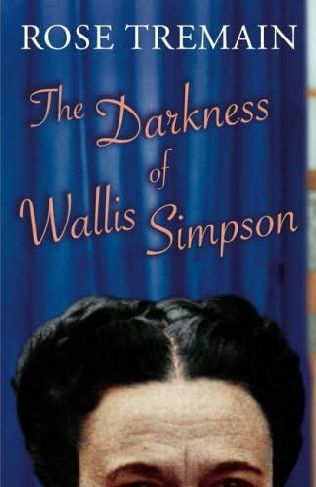
The Ebony Hand by Rose Tremain

Rose Tremain is a local author whose work I came across when I was researching the county of Norfolk, where I have lived for the past two and a half years. I have never been drawn to her work before, when working in the bookshop, but was at a loss of short stories for my challenge and this, part of The Darkness of Wallis Simpson collection, seemed appropriate.

Set in the 1950s, still in the aftermath of the Second World War, The Ebony Hand is the story of a spinster living a contented quiet existence in a small Norfolk village. She works part-time in a haberdashery shop, a quiet job that she loves, and becomes enamoured with an ebony glove hand on the counter, that she polishes and dresses with loving care. After the death of her sister from influenza, her brother-in-law checks himself into the local mental asylum; leaving their thirteen-year-old daughter, Nicolina, with no family.to take care of her. Our protagonist takes the girl in and raises her, despite knowing little about raising children, and finds her peaceful life shattered. Determined to find a good husband for Nicolina, she settles upon Paul Swinton, a good hardworking young man devoted to her niece, but she is thwarted by teenage emotions.

My favourite passage concerned Nicolina’s father, a tragic figure in his madness, fixating on the bull in the field opposite the asylum and attempting to hatch eggs on his windowsill.

“Victor was given a small room with orange curtains and a view of some water-meadows where an old grey-white bull foraged for grass among kingcups and reeds. Victor said the bull and he were ‘as one’ in their abandonment and loneliness. He said Aviva had held his mind together by cradling his head between her breasts. He announced that the minds of every living being on the earth were held together by a single mortal and precarious thing.”

Another passage perfectly describes how someone can pin their hopes on something unusual and inanimate as this ebony hand.

“When Victor said what he said about our minds being held together by peculiar things, I thought to myself that the peculiar thing, in my personal case, was this wooden hand. It was well made and heavy and smooth. I polished it with Min cream once a week. I enjoyed the way it had never aged or altered. And I began to think that this hand was like the kind of man I had to find for Nicolina: somebody who would not change or die.”

The Ebony Hand has a gentleness to it, a sweet tragedy to its main character. All her time and effort is spent on this young girl who disappoints her, but to whom she remains loyal, the faithful aunt and protector. She focuses all her hopes on this inanimate object, the ebony hand, only to have the haberdashery close and the hand sold and lost beyond her reach. It is a fragile tale, of love, loss and longing. As someone relatively new to the world of short stories, I found it charming and bittersweet.

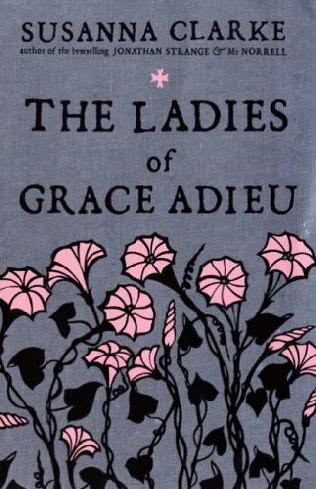
The Ladies of Grace Adieu by Susanna Clarke

"Magic, madam, is
like wine and,
if you are not used
to it, it will make
you drunk."

Those of you who have read my blog in the past may have realised that I have fallen head over heels in love with Susanna Clarke's writing. I did not cope well with Dickens at school and to this day have never finished any of his novels. Then I discover Ms Clarke, who writes like a modern day Dickens, and her fabulous book, Jonathan Strange and Mr Norrell. A mysterious journey through the Napoleonic era, following the rivalry of two magicians, and their effect on the fate of English magic. Now one of my favourite novels, and reviewed here, it left me wanting more.

The Ladies of Grace Adieu is a collection of short stories set in the same world as magic and faery as Jonathan Strange and Mr Norrell. There are eight stories, each written in the same delectable style, and each delving into a different faery story.

The Ladies of Grace Adieu is perhaps the story most reminiscent of Clarke's first novel, introducing us to a trio of female magicians and their struggle to get accepted by their male counterparts. Jonathan Strange himself makes an appearance in this glorious tale of magic, superstition and vengeful owls.

On Lickerish Hill is the tale of a sly woman who sells her daughter to a nobleman, under the proviso that in the last month of the first year of their marriage, she must spin five skeins of flax every day. The young woman, as cunning as her mother, devises a way to fulfill her husbands demands, by making a deal with a fairy. All she has to do, is discover his name, or her life will be his.

Mrs Mabb is the sad tale of a young woman who loses her love to the mysterious Mrs Mabb. Only her determination can rescue her love.

The Duke of Wellington Misplaces His Horse is an amusing story, set in Gaiman's fictional village of Wall. There in The Seventh Magpie Inn, the Duke of Wellington quarrels with a local villager over a pair of embroidery scissors and is later forced to cross the Wall to retrieve his stallion, released in spite by the angry man. There he discovers a small house where a young woman is embroidering some beautiful images of the Duke's past and possible future. When faced with his own death in gloriously coloured thread, the Duke must take matters into his own hand.

Mr Simonelli or The Fairy Widower, is a series of extracts from the diary of a young Italian man, who takes a position as cleric in a small town, where he has hopes over marrying well and creating a good home for himself. There he encounters a Fairy Widower, only to learn and discover more about his heritage and future destiny.

Tom Brightwind or How the Fairy Bridge Was Built at Thoresby is the tale of a young Jewish doctor and his fairy friend, travelling to visit a sick patient, when they come upon the poor begotten village of Thoresby. Tom is persuaded to build a fairy bridge across the river with unforeseen results.

Antickes and Frets is the tale of Mary, Queen of Scots, thrown into prison by her cousin, Elizabeth, and who ends up in the care of the Earl of Shrewsbury and his ambitious wife. She soon begins to suspect that the Countess had gotten where she was through dark means in her embroidery. Mary endeavours to use the same means to get rid of her cousin and thus usurp the throne of England.

The final story, John Uskglass and the Cumbrian Charcoal Burner, is an amusing tale of a Charcoal Burner (and his pig Blakeman!), whose life is rudely interrupted by the Raven King himself, and who enlists Saints to have his revenge on Uskglass.

Clarke's style is perfect for me. She manages to write about a world so unusual and unfamiliar to us, yet makes it so evocative and believeable that I for one, got completely sucked in. Her writing is a sheer delight to read, and I found myself having to take breaks after each short story, just as I would with a great novel, in order to really digest and enjoy the experience. My fear was that the next story would never be as good, but each was as good as the last.

A fabulous collection by a wonderful author. I cannot recommend these stories enough, and dearly hope that Susanna Clarke writes more very soon.

Sunday, December 7, 2008

Murder in Baker Street: New Tales of Sherlock Holmes

Description:

"Eleven times over, the stories written especially for this premier volume by some of the finest talents at work in crime fiction today -- Anne Perry, Loren D. Estleman, Gillian Linscott, Edward D. Hoch, Peter Tremayne, Stuart M. Kaminsky, Jon L. Breen, Bill Crider, Howard Engel, Carolyn Wheat, and L. B. Greenwood -- celebrate the keen mind, ratiocinative methods, personal eccentricities, and singular manners that epitomize the most admired fictional sleuth of all time: Sherlock Holmes.

More than a century has passed since Arthur Conan Doyle introduced Sherlock Holmes to the reading public, but no literary detective has yet to match the Great Detective in popularity and to command the esteem of such legions of fans -- not least among them the mystery writers who pay tribute to him in this collection. Ingeniously contrived and shrewdly executed, their tales revisit the comfortable clutter of the rooms at 221B Baker Street where Holmes in an old silk dressing gown, his gaze piercing and his fingers stained with chemicals or ink, again peruses a telling trifle or perhaps takes up his violin.

Again, too, the inscrutable Holmes and his redoubtable companion, Dr. Watson, display at their peerless best the science and arts of detection -- whether they are investigating a crime in the wilds of Africa or uncovering villainy in the heart of London, whether it's the case of the bloodless sock or borderline dandelions, a remarkable worm or a vampire's mark" -- from the inside flap

Contents:
Introduction • Daniel Stashower
• The Man from Capetown • Stuart M. Kaminsky
• The Case of the Borderland Dandelions • Howard Engel
• The Siren of Sennen Cove • Peter Tremayne
• The Case of the Bloodless Sock • Anne Perry
• The Case of the Anonymous Author • Edward D. Hoch
• The Case of the Vampire’s Mark • Bill Crider
• The Hansom for Mr. Holmes • Gillian Linscott
• The Adventure of the Arabian Knight • Loren D. Estelman
• The Adventure of the Cheshire Cheese • Jon L. Breen
• Darkest Gold • L. B. Greenwood
• The Remarkable Worm • Carolyn Wheat
Sidelights on Sherlock Holmes • Sir Arthur Conan Doyle
• 100 Years of Sherlock Holmes • Lloyd Rose
• And Now, a Word from Arthur Conan Doyle • Jon L. Lellenberg

My thoughts:

I enjoyed this collection of short stories featuring Sherlock Holmes and Dr. Watson, especially the ones "The Siren of Sennen Cove" and "A Hansom for Mr. Holmes". I also liked the essay "100 Years of Sherlock Holmes" which looked at how the Holmes character has been portrayed over the years on stage and film.

Date read: 10/30/2008
Rating: 3*/5 = good
(SS) Yearly count: 5/5

Monday, December 1, 2008

Challenge Completed

I finished this challenge, 5 short story collections completed!
My Reads:
Skin, Roald Dahl
The Little Black Book of Stories, Byatt
Fragile Things, Gaiman
Mystery Stories of the Nineteenth Century, ed. Robert Etty
A Scent from a Strange Mountain, Robert Olen Butler

My favorite was definately Fragile Things, I love Gaiman so that wasn't unexpected, coming a close seconf was A Scent from a Strange Mountain, a collection of very simply told stories about Vietnamese citizens who moved to America as a result of the war.

I hadn't read many short stories till this challenge, now I seem to be reading a lot more of them in snatches.

Saturday, November 22, 2008

Stories by Vladimir Nabokov


In his stories, Vladimir Nabokov so perfectly captures a character, or a setting, or an emotion, that I feel that the character is real, the setting surrounds me, and the emotion is my own.

His writing in these stories is so well done that I, a very amateur writer, feel the urge to try my hand at capturing the images around me, a task I will surely fail because I know I will never even remotely measure up to Nabokov’s incredible talent.

The unfortunate aspect of reading more than 60 of Nabokov’s short stories in one month is that the characters he so adroitly creates, the settings he so carefully draws, and the feelings he so perfectly captures are, for the most part, miserable, gloomy, and ultimately depressing. Also, some of his stories have fantastical elements that failed to resonate with me, and most dwell on negative aspects of human nature - subjects that weren’t pleasant for reading in bulk.

But I feel that the overall quality of Vladimir Nabokov’s writing is so extraordinary that he should be read simply for the marvelous experience that comes from reading his words, even if the reader doesn’t necessarily consider the negative underlying themes amazing.

Nabokov’s stories tend to be rather sad. My two favorite stories happened to be the least unpleasant. A number of other stories have also stayed with me.

Two Stories

In “First Love,” a man reflects on his first love. In the course of his description of a childhood summer’s events, it’s unclear to the reader whether his first love was traveling by overnight train; swimming at the beach; learning about butterflies; or meeting the little French girl, Colette. This story doesn’t have much plot or grand finale, but it is a beautiful story that I’ve already reread three times.

In “The Vane Sisters” story, a man reflects on his relationships with two sisters, one of whom was once his girlfriend. It also is incredibly subtle. (Highlight to read spoiler.) Nabokov’s subtle ending tells us that this man’s life really hasn’t been all that affected by the life and then the death of these sisters. It’s kind of depressing for the sisters, but an interesting realization for the man. It made me think about my own life and relationships. What impact do certain people have on me? For example, how often do I think about old boyfriends? Did they really impact my life significantly?

Other Stories

While I can only see myself rereading those two stories, there are a number of other stories that I keep remembering, even after starting the next story. Note that I do think Nabokov’s writing improved through the years; if you read the 60+ story volume as I did, start in the middle or go backward.

Here are some that stayed with me, with short introductions.

  • That in Aleppo Once…” His wife never existed, he’s sure of it.
  • A Forgotten Poet.” A dead poet arrives at the banquet held in his honor.
  • A Guide to Berlin.” One man recounts the small details of Berlin.
  • Music.” At a recital, a man sees his ex-wife across the room.
  • Perfection.” A very proper tutor is asked to take his young charge to the sea shore.
  • The Visit to the Museum.” A man goes to a museum to acquire a painting for a friend - and gets lost inside.
  • An Affair of Honor.” A man finds that his wife is having an affair with his friend, an ex-cavalry man, and he must fight a duel to save his good honor.
  • A Slice of Life.” The woman once loved him; now that his wife has left him, he has come to her to get drunk and commiserate.
  • The Dragon.” A dragon awakes after his ten-century slumber.
  • The Fight.” The elderly man he sees at the beach is also the bartender; he observes one night’s bar fight.
  • The Potato Elf.” A small dwarf in the circus seeks love.
  • Terra Incognita.” A group of bug collectors in the tropics get sick, lost, and angry at one another, as told from the perspective of the ill, delirious man.
  • The Reunion.” Two brothers, one living in Russia and one an émigré in Germany, meet after ten years.
  • Breaking the News.” The elderly, deaf woman’s son has died, and no one wants to tell her.
  • Cloud, Castle, Lake.” A man is forced into his first vacation, and he’s hoping that he’ll find the elusive happiness he seeks.
  • The Thunderstorm.” A man awakens in a storm to see Elijah dropping his mantle for Elisha.
I highly recommend reading at least one or two stories by Nabokov. His writing is amazing!

Cross-posted, with more detailed thoughts on his writing, at Rebecca Reads

The Gift Of Years

He decided at one point that if what he thought was, in fact, true, he would forgive her --- it would remain their secret. He made up his mind that relieving himself of the curiosity was all that mattered and kept this firmly in mind when he approached her to ask the question outright.
But then always a certain laziness would set in, for by now he had conceived of the right words, only his mouth could not utter them; at once anxious and weary, he realized it was not curiosity that wanted relief, it was the uncertainty of his disappointment. The laziness was just one symptom of fear, for though he would remind himself to try, the threat of an answer, of a finality terrific in its inevitability, made the uncertainty and self-denial already there a pain he preferred to bear, only so the alternative could never hurt him more --- which was why the question could not come, and would not come. And then he would remember all those moments in her life when she revealed her strange nature to him and him alone, those aberrations of the person she normally was and, he wanted to believe, had always been... . He would remember these images, hold them fast to his chest, then convince himself that meaning and connections conceived in memory were flimsy bridges and that to corrupt a good memory would be to corrupt them all. And so, selfishly, not because his suspicion might have been wrong but because it could have yielded the truth, he never asked her.

The Gift of Years by Vu Tran is a short story about Nguyen Van Lam and his youngest daughter Nguyen Tram-Mai. Lam is a husband and father of five. He has done his time in the army, been good to his wife and kids, and lived a fairly respectful life. Lam shares a special relationship with his youngest child Mai. Throughout the years he has watched his daughter with much concern in her reaction to violence, fighting, killing and death. He observed a pattern of interest and indifference through questions and actions during much of her youth and teen years. Also, Mai has always confided in her father about the events and details of her actions that she doesn't ordinarily share with others, even into her adult life. When Mai's husband is found dead after a night of usual drunkenness, Lam is too afraid to ask about and discover the truth behind this tragic event. But he knows that some day she will share this secret with him as well. Throughout the short story, Lam recalls his memories of Mai over the years. And in the end, prior to Lam's death, Mai shares one more event with her father that leads to a revelation that even he had never suspected.

The Gift of Years is a story that comes full circle in its presentation through an ending that is not expected. It shows how observations and memories over time are not always what they seem to be. I very much enjoyed this short story.

"The Gift of Years" by Vu Tran (from Fence) from The O. Henry Prize Stories 2007 edited by Laura Furman

Tuesday, November 18, 2008

Irish Girls About Town: Anthology of Short Stories


Irish Girls About Town (2002)
Anthology of Short Stories, 310 pages
This edition: Simon & Schuster, Inc. for Barnes & Noble (2006)

As with the U.K. and Irish edition, Barnardo's and the Society of St. Vincent de Paul will benefit from the sale of this edition of Irish Girls About Town.


Another review that has been languishing on my desk since October. Ay yi yi.

No sooner did I recuperate from the Read-A-Thon, than I began preparing, and then became immersed in, National Novel Writing Month (NaNoWriMo). As a first time participant, I had no idea what I was getting myself into - and yes, that would be par for the course.

I had decided early in the marathon, that short stories were the way to go, and so I read Interpreter of Maladies , this book, and a little bit of The Book of Lost Things.

I flew through this book of 15 stories, all written by Irish women. The theme throughout is that of relationships, ranging from familial to marriage, and even though there is a single theme, there are enough variations of it to make it easy to read and just as easy to enjoy.

My personal favorites were "Soulmates" by Marian Keyes, "The Twenty-Eighth Day" by Catherine Barry, and "Thelma, Louise and the Lurve Gods" by Cathy Kelly. Don't get me wrong though, there is not a bad story in the bunch, it's just that I felt compelled to list the ones that stick out in my mind the most.

"Soulmates" is an interesting tale about two 'perfect' people fated to meet and be together because they are, yes, soulmates. Everything is just right when it comes to these two: their meeting, their courtship, and subsequent marriage. But when trouble looms on the horizon, their friends harbor a secret hope that all will unravel, and do so badly. I will leave it for you to read the story to find out what happens.

"The Twenty-Eighth Day" is for anyone who has suffered through PMS – and I just don't mean the woman:
I am being tormented and tortured by some unknown force I cannot touch or feel. It's like somebody else has taken over my body, mind, and soul. There is a demon spirit inside me, telling me to do inappropriate things, prompting me to say hurtful, offensive words, urging me to be the meanest b---- that ever walked the earth.
"Thelma, Louise and the Lurve Gods" initially appears to be a story about a woman who needs a vacation from her boring life, to experience something more exciting than "not having a Chinese takeaway on Friday nights but…shock, horror…having pizza instead." No sooner does the vacation begin than a snag threatens to destroy all her hopes. However she eventually learns that the trip she is on is one of self-discovery, for as she notes, "Although my own world had shifted on its axis after the holiday, in the office nothing had changed." Things around her remained the same, it was she who had changed - who needed to change - so she could see those things, and herself, more clearly.

I am giving this book a 5 star rating as per my system that states a book earns this because I could not put it down. And I couldn't.

Wednesday, November 5, 2008

Stories by Nathaniel Hawthorne

To my delight, many of Nathaniel Hawthorne’s stories perfectly fit the “gothic” theme of Halloween in a style that I loved. Even though I dislike being “scared,” these stories were again the perfect amount of creepy for me.

One of Hawthorne’s collections of stories is called Twice-Told Tales. As I read, I began to understand why: while many stories are on the surface about Puritans in the early days of America, they aren’t really about Puritans. Hawthorne is telling us a different story. (Links below are to the stories in the public domain.)

For example, in Hawthorne’s probably most well-known story, “Young Goodman Brown,” the titular character is invited by the devil to practice witchcraft one night. To his surprise, the people he sees with the devil are his own religious teachers and leaders. But what we read is only a part of the story. The “tale” is told again when we realize the symbolism: even those striving to lead are hypocrites full of error.

Other stories likewise have a “ghostly,” Halloween-ish feel to them. For example, in “Rappaccini’s Daughter,” the woman is literally poisonous. In “The Snow-Image,” two children make a snow person come alive; I loved this “Frosty the Snowman” precursor. Similarly, in “Feathertop,” a witch brings her scarecrow to life. In”Lady Eleanore’s Mantle,” a woman’s coat becomes the carrier of a plague of sorts. In “Ethan Brand,” the titular character has sold his soul to the devil. I think these would be perfect for a ghostly but not scary Halloween read! I think “Feathertop” and “The Snow-Image” would also be appropriate for children.

While not all of Hawthorne’s stories are gothic, all of them have subtle meanings. Some people may not like Hawthorne’s blatant messages in his stories, but I thought his stories were also entertaining stories.

Probably my favorite non-ghostly story is “The Great Stone Face.” In this story, a small rural community is looking for the fulfillment of the legend: a person whose countenance appears the same as the face on the local hillside. This person will bring honor to the community. Over the course of a lifetime, they find the image of the stone face in a rich entrepreneur, a war hero, and a poet, all of whom end up failing the community. I loved the message of this story: that we can make a difference to others without doing something grand, and humility is always better than pride.

Further, in “The Birth-mark,”a husband wants his wonderful wife to undergo his experimental surgery to remove a birthmark from her face that he thinks is the hand print of the devil; but it’s not the hand of devil. A young man enters Boston in “My Kinsman, Major Molineux” looking for his relative to help him get started in the world; but his relative doesn’t have time for him. In “The Great Carbuncle” a group of people are searching for a huge, precious jewel, each for their own reasons — to their ultimate downfall. Finally, in “The Wives of the Dead,” two sisters find out on the same day that their husbands have died. I won’t tell you what happens, but it is “touching” in the end.

There were other, well-known stories that I read and didn’t like very much. I think I disliked the slow pace and the lack of engagement I felt with any particular character.

In the end, Hawthorne has a style of his own. He is almost a favorite for me, after Maupassant and Chekhov.

Cross-posted here.

Tuesday, November 4, 2008

Stories by Flannery O'Connor

To understand Flannery O’Connor’s short stories is understand the rural South that she was familiar with in the pre-1970s. Her stories focus on aspects character in human, every-day situations all revolving around her South, dealing with race relations, Christianity, rural versus city living, parent-child relationships, etc. She brings the reader into the settings by capturing thought processes, a style I found engaging. I enjoyed reading her stories, although they illustrated a lack of hope in human nature.

Themes

Race and Class

I found the most common theme in Flannery O’Connor’s stories is race and class, looking at conflict between generations. A great example is “Everything that Rises Must Converge.” In this story, a progressive young man must ride the bus with his older mother to the YMCA because she is “afraid” of the blacks on the integrated buses. He wants to teach her a lesson, but in the end he realizes he still needs his mother, as “old-fashioned” as she is.

Race and class often mix in O’Connor’s stories. In “Revelation,” a self-satisfied judgmental woman is baffled when a young girl calls her a rude name; in the end, she (maybe) realizes the folly of her judgments.

Other stories clearly dealing with race and class also include rural versus city conflicts. Some of these stories are “The Artificial Nigger” (a father and son visit Atlanta); “The Displaced Person” (a Jewish refugee family joins the farm); “A Late Encounter With the Enemy” (Grandpa fought in the civil war); and “The Geranium” and “Judgment Day” (an old man, living in New York City with his daughter, longs to return to the South to die; these are essentially the same story, one written at the beginning and one at the end of O’Connor’s career).

Isolated, Lonely People

Some of my favorite stories were about lonely, isolated individuals seeking for a place. In “The Crop,” a lonely woman sits down to write a short story-and forgets where she is. I love this story because I can relate to this writer: she can’t figure out how to get the story from her head to paper. In “A Stroke of Good Fortune,” the woman ponders a fortune teller’s message, and the reader, following her thoughts, knows what it is. I loved how clueless she was as I followed her thought process.

While others weren’t favorites, they were also about lonely, isolated people: “You Can’t Be Any Poorer Than Dead” (14-year-old must bury his grandfather); “Good Country People” (a lonely girl with a wooden leg finally trusts someone, the good country man selling bibles); “The Life You Save May Be Your Own” (mother gets her mute daughter married to a nice, good country man); “A View of the Woods” (a lonely, selfish grandfather idolizes his granddaughter); and “The Enduring Chill” (a lonely, unsuccessful writer returns to Georgia to die).

Christianity (Good versus Evil)

Flannery O’Connor’s stories also deal with Christianity and good versus evil in general. Her view of good and evil in the face of Christianity is intriguing.

A Good Man is Hard to Find” is probably the most familiar O’Connor story, but I really don’t like it. Grandma gets her family lost on a side road. They meet a murderer, who Grandma is sure she recognizes as a good man. I think it’s a look at how everyone has good, and yet, we’re all missing good too; we’re all condemned. I find it a bit disturbing.

In other stories, people try to save each other through religion and because of religious training. In “The River,” the boy’s caretaker, Mrs. Conin, wants to “save” him with religion. In “Parker’s Back,” Parker gets one more tattoo that he thinks his religious wife will appreciate. In “The Comforts of Home,” Thomas’s mother thinks she can save a loose woman from corruption. In “The Lame Shall Enter First,” Sheppard thinks he can redeem a criminal boy who shows more promise than his own son.

I sometimes didn’t like the violent shock at the end of each story: but that may be because I was reading all of her short stories in the same week. If you read Flannery O’Connor, read her in installments.

In the end, Flannery O’Connor certainly has a marvelous but morbid story telling ability.

Cross-posted in longer form here.

Monday, November 3, 2008

Stories by Washington Irving

Washington Irving’s ghost stories are just my type of ghost story: they’re tricky and creepy, but full of twists. Irving’s twists are rather predictable, but I found that even with Irving’s long-winded, wordy, early-1800s prose made his stories delightful to read.

In the introduction to my 1960’s book, Washington Irving is called the “Father of American Literature” and the “First American Man of Letters.” While I don’t know enough about his contemporaries to know if that’s accurate, I do know that many of his stories have a distinct American feel to them, as the setting is clearly the “new world.” The rustic and spacious American setting feels refreshing when I approach Irving’s writing; it’s as if that rural Connecticut community still exists. It also seems Irving’s world has seeped down into our modern culture: how many American communities today have a Sleepy Hollow street, neighborhood, or town somewhere near?

“The Legend of Sleepy Hollow,” probably Irving’s most well-known story, illustrates a quaint, rural, new American community. Sleepy Hollow is “sleepy,” but it does have one claim to fame: the local haunt, the headless horseman. In the story, scrawny Ichabod Crane and burly Brom Bones vie for the attentions of the local beauty, and the headless horseman visits Ichabod Crane late one night. As I said, Irving’s story is predictable, but I still enjoyed it.

“Rip Van Winkle” occurs in a similar community. Rip Van Winkle is a good-for-nothing married to a nagging woman. One night, he meets some gnomes in the wood, who offer him alcoholic refreshment. When he wakes up the next morning, something isn’t quite right. Again, this is a somewhat predictable story, but I still enjoyed it, odd as it was.

“The Specter Bridegroom,” on the other hand, takes place in a castle in Germany, where a bride is awaiting her groom for their wedding. Though he arrives in time, he insists on leaving before the wedding, for he has a date with the grave. I was annoyed with Irving for giving up the ending a few pages too soon; I suspect it would never have been published that way today, and I thought it could have used some reorganization. That said, I still enjoyed the amusing story.

“The Adventure of the German Student” also occured in Europe, this time in creepy Revolutionary Paris, a place with ghosts, apparently.

“The Devil and Tom Walker” returns to the New England setting. This time, another good-for-nothing man married to another nagging wife (seems to be a theme in Irving) happens upon the Devil in the wood and strikes a bargain with him. Lest you might be thinking of doing the same thing, you should read this warning-story! Tom’s ultimate end is quite amusing.

I did read a few other stories, but these were the most entertaining. Irving’s style is not for everyone: as I said before, he is very wordy and tends to detail everything. I liked that, but you might not.

These stories happened to be Irving’s most “gothic.” I don’t normally like ghost stories, but these were just to my liking: a somewhat real feel to them, and yet also a somewhat “fantastic” story behind them.

Cross-posted here.

Friday, October 24, 2008

Months and Seasons - Wendy's Book Review


These were adults with too much time on their hands. And didn’t they know that the projector, sound system, and speakers were all Japanese? Their dancing shoes were probably from Mexico or China. America’s jobs were going elsewhere and Americans were just dressing up and playing like kids. Gas prices were high. General Motors was going broke and laying off thousands - and these people were dancing. -From Months and Seasons, Dracula Slinks Into the Night, page 14-

Christopher Meeks stories are full of people who push through the obstacles of life and overcome their deepest fears in order to find joy in living. Months and Seasons, Meeks second collection of short stories is a delightful book which introduces the reader to characters who are ordinary, but in their ordinariness remind us of the common threads which bind people together.

In the story Catalina, we meet a man who is traveling to Catalina via a catamaran. He is grieving the loss of his son.

For the full hour-ride, Daunus sat outside, looking rearward into the gray wake. At one point, a white baseball cap landed in the wake. Someone lost it. His chest felt constricted. Breathing was hard. he’d given this country everything, including now his son. -From Months and Seasons, Catalina, page 37-

He meets a woman on the boat who optimistically tells him that Catalina is ‘like a persimmon - unexpected fruit on a naked tree.‘ The man’s discovery that there is still beauty in the world, despite his devastating loss, allows him to go forward into his life. This simple story is an example of the hope which Meeks infuses into all of his stories as his characters confront their fears of aging, mortality and the sometimes insurmountable challenges of relationships.

In some stories, the characters must battle their own inner demons to make sense of the world and their place within it. In A Shoe Falls, Max must evaluate his marriage to Alice - a woman who clutters the house with her shoes. He wakes from a dream about owing a cab driver $150,000 and thinks:

…if the ride was getting so expensive and monotonous, why hadn’t he asked the cab driver to let him off? Why hadn’t he done more than sit there, bouncing in the back seat pondering his sanity? He was a passive man, goddamn it. -From Months and Seasons, A Shoe Falls, page 72-

Max’s inner journey in this story looks at how one man (who could be any of us) examines his “dreams” in the face of his reality. Will he be able to overcome regret for what he has does not have in order to accept what is?

My favorite story of the collection is Breaking Water - which opens with a supermodel awakening from open heart surgery. Merrill appears to have lost everything of importance in her life - her career as a model, her marriage, and her vision of who she is. She must begin again and turns toward art school as a possible answer.

She also couldn’t draw knees well, or a cat’s mysterious stare, or the hope she had had on her wedding day at the Unitarian Church where the minister’s smile had stretched exactly from pupil to pupil - proportions as perfect as Michelangelo. Merrill, however, could draw losing. It was a mere scratch through a face or a line down the middle of one’s chest. -From Months and Seasons, Breaking Water, page 136-

Merrill’s story is one of falling down and getting back up again; of finding hope in the midst of despair. It touched me.

And this is perhaps the strength of the collection - in showing us the lives of these ordinary characters, Meeks exposes what is human in all of us. Who has never felt life was not living up to expectation? Or looked at the years unraveling and wondered if we had the time to do everything we wanted? Or experienced a loss so big that hope seemed irretrievable? Or found our fears so encompassing we felt paralyzed to overcome them? Meeks explores these ideas with humor and sensitivity, and creates a collection hard to put down.

For those readers who love short stories, Months and Seasons is a must read. Highly recommended.

Meeks’ is also the author of a previous collection - The Middle-Aged Man and the Sea.

At the end of Months and Seasons, Meeks includes an excerpt of a new book he is working on…a novel-in-stories titled The Brightest Moon of the Century. I read this excerpt and was hungry for more. Meeks characterization of the title character, Edward, reminded me of John Irving’s Garp. I have added The Brightest Moon of the Century to my watch list!

Thursday, October 23, 2008

Blow-Up

Riding upon the wind’s back in the warmth of an eleven o’clock sun, a part-time photographer makes his way through the streets of Paris to snap, forever in time, the winsome activities of ordinary life.

“In all ways when one is walking about with a camera, one has almost a duty to be attentive, to not lose that abrupt and happy rebound of the sun’s rays off an old stone, or the pigtails-flying run of a small girl going home with a loaf of bread or a bottle of milk.”
- From "Blow-Up"

Taking a break from snapping photographs, Roberto Michel raises a match to light his cigarette when the sight of a mismatched couple grabs his attention - a teenage boy with a woman many years his senior. Michel begins to conjecture as to how this couple came to be – a physical woman with a subdued and nervous boy.

“Now the woman had swung around smoothly, putting the young boy between herself and the wall, I saw them almost in profile, and he was taller, though not much taller, and yet she dominated him, it seemed like she was hovering over him, crushing him just by being there, smiling…”
- From "Blow-Up"

He snaps a photograph to capture this peculiar sight, burning a moment of time into his memory that will torment his thoughts as it lingers within his mind. What is it that this picture reveals?

Blow-Up, by Julio Cortázar, is a beautiful, stream-of-consciousness story that embodies the surrealist ideas of embracing the true flow of thought and evoking confusion through unusual juxtaposition. This story could be framed in a museum for its natural beauty – right next to the melting clock’s of Salvador Dalí’s painting, A Persistence of Memory, for they both illustrate how memories can litter the landscape of one’s mind.

If one is looking for a an easy to read story, I suggest, perhaps, "The Grasshopper and the Bell Cricket," by Yasunari Kawabata, for that story is sparse in text. However, if one enjoys to dive head first into a lake of words, this is the story is for you –the current may push you around but the water feels great. O'CH