Sunday, December 7, 2008

Murder in Baker Street: New Tales of Sherlock Holmes

Description:

"Eleven times over, the stories written especially for this premier volume by some of the finest talents at work in crime fiction today -- Anne Perry, Loren D. Estleman, Gillian Linscott, Edward D. Hoch, Peter Tremayne, Stuart M. Kaminsky, Jon L. Breen, Bill Crider, Howard Engel, Carolyn Wheat, and L. B. Greenwood -- celebrate the keen mind, ratiocinative methods, personal eccentricities, and singular manners that epitomize the most admired fictional sleuth of all time: Sherlock Holmes.

More than a century has passed since Arthur Conan Doyle introduced Sherlock Holmes to the reading public, but no literary detective has yet to match the Great Detective in popularity and to command the esteem of such legions of fans -- not least among them the mystery writers who pay tribute to him in this collection. Ingeniously contrived and shrewdly executed, their tales revisit the comfortable clutter of the rooms at 221B Baker Street where Holmes in an old silk dressing gown, his gaze piercing and his fingers stained with chemicals or ink, again peruses a telling trifle or perhaps takes up his violin.

Again, too, the inscrutable Holmes and his redoubtable companion, Dr. Watson, display at their peerless best the science and arts of detection -- whether they are investigating a crime in the wilds of Africa or uncovering villainy in the heart of London, whether it's the case of the bloodless sock or borderline dandelions, a remarkable worm or a vampire's mark" -- from the inside flap

Contents:
• Introduction • Daniel Stashower
• The Man from Capetown • Stuart M. Kaminsky
• The Case of the Borderland Dandelions • Howard Engel
• The Siren of Sennen Cove • Peter Tremayne
• The Case of the Bloodless Sock • Anne Perry
• The Case of the Anonymous Author • Edward D. Hoch
• The Case of the Vampire’s Mark • Bill Crider
• The Hansom for Mr. Holmes • Gillian Linscott
• The Adventure of the Arabian Knight • Loren D. Estelman
• The Adventure of the Cheshire Cheese • Jon L. Breen
• Darkest Gold • L. B. Greenwood
• The Remarkable Worm • Carolyn Wheat
• Sidelights on Sherlock Holmes • Sir Arthur Conan Doyle
• 100 Years of Sherlock Holmes • Lloyd Rose
• And Now, a Word from Arthur Conan Doyle • Jon L. Lellenberg

My thoughts:

I enjoyed this collection of short stories featuring Sherlock Holmes and Dr. Watson, especially the ones "The Siren of Sennen Cove" and "A Hansom for Mr. Holmes". I also liked the essay "100 Years of Sherlock Holmes" which looked at how the Holmes character has been portrayed over the years on stage and film.

Date read: 10/30/2008
Rating: 3*/5 = good
(SS) Yearly count: 5/5

Monday, December 1, 2008

Challenge Completed

I finished this challenge, 5 short story collections completed!
My Reads:
Skin, Roald Dahl
The Little Black Book of Stories, Byatt
Fragile Things, Gaiman
Mystery Stories of the Nineteenth Century, ed. Robert Etty
A Scent from a Strange Mountain, Robert Olen Butler

My favorite was definately Fragile Things, I love Gaiman so that wasn't unexpected, coming a close seconf was A Scent from a Strange Mountain, a collection of very simply told stories about Vietnamese citizens who moved to America as a result of the war.

I hadn't read many short stories till this challenge, now I seem to be reading a lot more of them in snatches.

Saturday, November 22, 2008

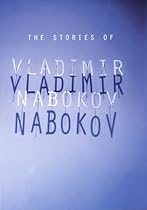
Stories by Vladimir Nabokov


In his stories, Vladimir Nabokov so perfectly captures a character, or a setting, or an emotion, that I feel that the character is real, the setting surrounds me, and the emotion is my own.

His writing in these stories is so well done that I, a very amateur writer, feel the urge to try my hand at capturing the images around me, a task I will surely fail because I know I will never even remotely measure up to Nabokov’s incredible talent.

The unfortunate aspect of reading more than 60 of Nabokov’s short stories in one month is that the characters he so adroitly creates, the settings he so carefully draws, and the feelings he so perfectly captures are, for the most part, miserable, gloomy, and ultimately depressing. Also, some of his stories have fantastical elements that failed to resonate with me, and most dwell on negative aspects of human nature - subjects that weren’t pleasant for reading in bulk.

But I feel that the overall quality of Vladimir Nabokov’s writing is so extraordinary that he should be read simply for the marvelous experience that comes from reading his words, even if the reader doesn’t necessarily consider the negative underlying themes amazing.

Nabokov’s stories tend to be rather sad. My two favorite stories happened to be the least unpleasant. A number of other stories have also stayed with me.

Two Stories

In “First Love,” a man reflects on his first love. In the course of his description of a childhood summer’s events, it’s unclear to the reader whether his first love was traveling by overnight train; swimming at the beach; learning about butterflies; or meeting the little French girl, Colette. This story doesn’t have much plot or grand finale, but it is a beautiful story that I’ve already reread three times.

In “The Vane Sisters” story, a man reflects on his relationships with two sisters, one of whom was once his girlfriend. It also is incredibly subtle. (Highlight to read spoiler.) Nabokov’s subtle ending tells us that this man’s life really hasn’t been all that affected by the life and then the death of these sisters. It’s kind of depressing for the sisters, but an interesting realization for the man. It made me think about my own life and relationships. What impact do certain people have on me? For example, how often do I think about old boyfriends? Did they really impact my life significantly?

Other Stories

While I can only see myself rereading those two stories, there are a number of other stories that I keep remembering, even after starting the next story. Note that I do think Nabokov’s writing improved through the years; if you read the 60+ story volume as I did, start in the middle or go backward.

Here are some that stayed with me, with short introductions.

  • “That in Aleppo Once…” His wife never existed, he’s sure of it.
  • “A Forgotten Poet.” A dead poet arrives at the banquet held in his honor.
  • “A Guide to Berlin.” One man recounts the small details of Berlin.
  • “Music.” At a recital, a man sees his ex-wife across the room.
  • “Perfection.” A very proper tutor is asked to take his young charge to the sea shore.
  • “The Visit to the Museum.” A man goes to a museum to acquire a painting for a friend - and gets lost inside.
  • “An Affair of Honor.” A man finds that his wife is having an affair with his friend, an ex-cavalry man, and he must fight a duel to save his good honor.
  • “A Slice of Life.” The woman once loved him; now that his wife has left him, he has come to her to get drunk and commiserate.
  • “The Dragon.” A dragon awakes after his ten-century slumber.
  • “The Fight.” The elderly man he sees at the beach is also the bartender; he observes one night’s bar fight.
  • “The Potato Elf.” A small dwarf in the circus seeks love.
  • “Terra Incognita.” A group of bug collectors in the tropics get sick, lost, and angry at one another, as told from the perspective of the ill, delirious man.
  • “The Reunion.” Two brothers, one living in Russia and one an émigré in Germany, meet after ten years.
  • “Breaking the News.” The elderly, deaf woman’s son has died, and no one wants to tell her.
  • “Cloud, Castle, Lake.” A man is forced into his first vacation, and he’s hoping that he’ll find the elusive happiness he seeks.
  • “The Thunderstorm.” A man awakens in a storm to see Elijah dropping his mantle for Elisha.
I highly recommend reading at least one or two stories by Nabokov. His writing is amazing!

Cross-posted, with more detailed thoughts on his writing, at Rebecca Reads

The Gift Of Years

He decided at one point that if what he thought was, in fact, true, he would forgive her --- it would remain their secret. He made up his mind that relieving himself of the curiosity was all that mattered and kept this firmly in mind when he approached her to ask the question outright.
But then always a certain laziness would set in, for by now he had conceived of the right words, only his mouth could not utter them; at once anxious and weary, he realized it was not curiosity that wanted relief, it was the uncertainty of his disappointment. The laziness was just one symptom of fear, for though he would remind himself to try, the threat of an answer, of a finality terrific in its inevitability, made the uncertainty and self-denial already there a pain he preferred to bear, only so the alternative could never hurt him more --- which was why the question could not come, and would not come. And then he would remember all those moments in her life when she revealed her strange nature to him and him alone, those aberrations of the person she normally was and, he wanted to believe, had always been... . He would remember these images, hold them fast to his chest, then convince himself that meaning and connections conceived in memory were flimsy bridges and that to corrupt a good memory would be to corrupt them all. And so, selfishly, not because his suspicion might have been wrong but because it could have yielded the truth, he never asked her.

The Gift of Years by Vu Tran is a short story about Nguyen Van Lam and his youngest daughter Nguyen Tram-Mai. Lam is a husband and father of five. He has done his time in the army, been good to his wife and kids, and lived a fairly respectful life. Lam shares a special relationship with his youngest child Mai. Throughout the years he has watched his daughter with much concern in her reaction to violence, fighting, killing and death. He observed a pattern of interest and indifference through questions and actions during much of her youth and teen years. Also, Mai has always confided in her father about the events and details of her actions that she doesn't ordinarily share with others, even into her adult life. When Mai's husband is found dead after a night of usual drunkenness, Lam is too afraid to ask about and discover the truth behind this tragic event. But he knows that some day she will share this secret with him as well. Throughout the short story, Lam recalls his memories of Mai over the years. And in the end, prior to Lam's death, Mai shares one more event with her father that leads to a revelation that even he had never suspected.

The Gift of Years is a story that comes full circle in its presentation through an ending that is not expected. It shows how observations and memories over time are not always what they seem to be. I very much enjoyed this short story.

"The Gift of Years" by Vu Tran (from Fence) from The O. Henry Prize Stories 2007 edited by Laura Furman

Tuesday, November 18, 2008

Irish Girls About Town: Anthology of Short Stories


Irish Girls About Town (2002)
Anthology of Short Stories, 310 pages
This edition: Simon & Schuster, Inc. for Barnes & Noble (2006)

As with the U.K. and Irish edition, Barnardo's and the Society of St. Vincent de Paul will benefit from the sale of this edition of Irish Girls About Town.


Another review that has been languishing on my desk since October. Ay yi yi.

No sooner did I recuperate from the Read-A-Thon, than I began preparing, and then became immersed in, National Novel Writing Month (NaNoWriMo). As a first time participant, I had no idea what I was getting myself into - and yes, that would be par for the course.

I had decided early in the marathon, that short stories were the way to go, and so I read Interpreter of Maladies , this book, and a little bit of The Book of Lost Things.

I flew through this book of 15 stories, all written by Irish women. The theme throughout is that of relationships, ranging from familial to marriage, and even though there is a single theme, there are enough variations of it to make it easy to read and just as easy to enjoy.

My personal favorites were "Soulmates" by Marian Keyes, "The Twenty-Eighth Day" by Catherine Barry, and "Thelma, Louise and the Lurve Gods" by Cathy Kelly. Don't get me wrong though, there is not a bad story in the bunch, it's just that I felt compelled to list the ones that stick out in my mind the most.

"Soulmates" is an interesting tale about two 'perfect' people fated to meet and be together because they are, yes, soulmates. Everything is just right when it comes to these two: their meeting, their courtship, and subsequent marriage. But when trouble looms on the horizon, their friends harbor a secret hope that all will unravel, and do so badly. I will leave it for you to read the story to find out what happens.

"The Twenty-Eighth Day" is for anyone who has suffered through PMS – and I just don't mean the woman:
I am being tormented and tortured by some unknown force I cannot touch or feel. It's like somebody else has taken over my body, mind, and soul. There is a demon spirit inside me, telling me to do inappropriate things, prompting me to say hurtful, offensive words, urging me to be the meanest b---- that ever walked the earth.
"Thelma, Louise and the Lurve Gods" initially appears to be a story about a woman who needs a vacation from her boring life, to experience something more exciting than "not having a Chinese takeaway on Friday nights but…shock, horror…having pizza instead." No sooner does the vacation begin than a snag threatens to destroy all her hopes. However she eventually learns that the trip she is on is one of self-discovery, for as she notes, "Although my own world had shifted on its axis after the holiday, in the office nothing had changed." Things around her remained the same, it was she who had changed - who needed to change - so she could see those things, and herself, more clearly.

I am giving this book a 5 star rating as per my system that states a book earns this because I could not put it down. And I couldn't.

Wednesday, November 5, 2008

Stories by Nathaniel Hawthorne

To my delight, many of Nathaniel Hawthorne’s stories perfectly fit the “gothic” theme of Halloween in a style that I loved. Even though I dislike being “scared,” these stories were again the perfect amount of creepy for me.

One of Hawthorne’s collections of stories is called Twice-Told Tales. As I read, I began to understand why: while many stories are on the surface about Puritans in the early days of America, they aren’t really about Puritans. Hawthorne is telling us a different story. (Links below are to the stories in the public domain.)

For example, in Hawthorne’s probably most well-known story, “Young Goodman Brown,” the titular character is invited by the devil to practice witchcraft one night. To his surprise, the people he sees with the devil are his own religious teachers and leaders. But what we read is only a part of the story. The “tale” is told again when we realize the symbolism: even those striving to lead are hypocrites full of error.

Other stories likewise have a “ghostly,” Halloween-ish feel to them. For example, in “Rappaccini’s Daughter,” the woman is literally poisonous. In “The Snow-Image,” two children make a snow person come alive; I loved this “Frosty the Snowman” precursor. Similarly, in “Feathertop,” a witch brings her scarecrow to life. In”Lady Eleanore’s Mantle,” a woman’s coat becomes the carrier of a plague of sorts. In “Ethan Brand,” the titular character has sold his soul to the devil. I think these would be perfect for a ghostly but not scary Halloween read! I think “Feathertop” and “The Snow-Image” would also be appropriate for children.

While not all of Hawthorne’s stories are gothic, all of them have subtle meanings. Some people may not like Hawthorne’s blatant messages in his stories, but I thought his stories were also entertaining stories.

Probably my favorite non-ghostly story is “The Great Stone Face.” In this story, a small rural community is looking for the fulfillment of the legend: a person whose countenance appears the same as the face on the local hillside. This person will bring honor to the community. Over the course of a lifetime, they find the image of the stone face in a rich entrepreneur, a war hero, and a poet, all of whom end up failing the community. I loved the message of this story: that we can make a difference to others without doing something grand, and humility is always better than pride.

Further, in “The Birth-mark,”a husband wants his wonderful wife to undergo his experimental surgery to remove a birthmark from her face that he thinks is the hand print of the devil; but it’s not the hand of devil. A young man enters Boston in “My Kinsman, Major Molineux” looking for his relative to help him get started in the world; but his relative doesn’t have time for him. In “The Great Carbuncle” a group of people are searching for a huge, precious jewel, each for their own reasons — to their ultimate downfall. Finally, in “The Wives of the Dead,” two sisters find out on the same day that their husbands have died. I won’t tell you what happens, but it is “touching” in the end.

There were other, well-known stories that I read and didn’t like very much. I think I disliked the slow pace and the lack of engagement I felt with any particular character.

In the end, Hawthorne has a style of his own. He is almost a favorite for me, after Maupassant and Chekhov.

Cross-posted here.

Tuesday, November 4, 2008

Stories by Flannery O'Connor

To understand Flannery O’Connor’s short stories is understand the rural South that she was familiar with in the pre-1970s. Her stories focus on aspects character in human, every-day situations all revolving around her South, dealing with race relations, Christianity, rural versus city living, parent-child relationships, etc. She brings the reader into the settings by capturing thought processes, a style I found engaging. I enjoyed reading her stories, although they illustrated a lack of hope in human nature.

Themes

Race and Class

I found the most common theme in Flannery O’Connor’s stories is race and class, looking at conflict between generations. A great example is “Everything that Rises Must Converge.” In this story, a progressive young man must ride the bus with his older mother to the YMCA because she is “afraid” of the blacks on the integrated buses. He wants to teach her a lesson, but in the end he realizes he still needs his mother, as “old-fashioned” as she is.

Race and class often mix in O’Connor’s stories. In “Revelation,” a self-satisfied judgmental woman is baffled when a young girl calls her a rude name; in the end, she (maybe) realizes the folly of her judgments.

Other stories clearly dealing with race and class also include rural versus city conflicts. Some of these stories are “The Artificial Nigger” (a father and son visit Atlanta); “The Displaced Person” (a Jewish refugee family joins the farm); “A Late Encounter With the Enemy” (Grandpa fought in the civil war); and “The Geranium” and “Judgment Day” (an old man, living in New York City with his daughter, longs to return to the South to die; these are essentially the same story, one written at the beginning and one at the end of O’Connor’s career).

Isolated, Lonely People

Some of my favorite stories were about lonely, isolated individuals seeking for a place. In “The Crop,” a lonely woman sits down to write a short story-and forgets where she is. I love this story because I can relate to this writer: she can’t figure out how to get the story from her head to paper. In “A Stroke of Good Fortune,” the woman ponders a fortune teller’s message, and the reader, following her thoughts, knows what it is. I loved how clueless she was as I followed her thought process.

While others weren’t favorites, they were also about lonely, isolated people: “You Can’t Be Any Poorer Than Dead” (14-year-old must bury his grandfather); “Good Country People” (a lonely girl with a wooden leg finally trusts someone, the good country man selling bibles); “The Life You Save May Be Your Own” (mother gets her mute daughter married to a nice, good country man); “A View of the Woods” (a lonely, selfish grandfather idolizes his granddaughter); and “The Enduring Chill” (a lonely, unsuccessful writer returns to Georgia to die).

Christianity (Good versus Evil)

Flannery O’Connor’s stories also deal with Christianity and good versus evil in general. Her view of good and evil in the face of Christianity is intriguing.

“A Good Man is Hard to Find” is probably the most familiar O’Connor story, but I really don’t like it. Grandma gets her family lost on a side road. They meet a murderer, who Grandma is sure she recognizes as a good man. I think it’s a look at how everyone has good, and yet, we’re all missing good too; we’re all condemned. I find it a bit disturbing.

In other stories, people try to save each other through religion and because of religious training. In “The River,” the boy’s caretaker, Mrs. Conin, wants to “save” him with religion. In “Parker’s Back,” Parker gets one more tattoo that he thinks his religious wife will appreciate. In “The Comforts of Home,” Thomas’s mother thinks she can save a loose woman from corruption. In “The Lame Shall Enter First,” Sheppard thinks he can redeem a criminal boy who shows more promise than his own son.

I sometimes didn’t like the violent shock at the end of each story: but that may be because I was reading all of her short stories in the same week. If you read Flannery O’Connor, read her in installments.

In the end, Flannery O’Connor certainly has a marvelous but morbid story telling ability.

Cross-posted in longer form here.