Monday, May 10, 2010

Nina Berberova, The Tattered Cloak (1943, 1993)

Cross-posted at Smithereens

When the mood for something Russian strikes, I turn towards Berberova. I know she has been sparsely translated in English, but in France in the 1990s many of her novellas have been republished and have achieved some success. That said, I’m not sure this particular novella was such a good choice. The story of two sisters, Ariadna and Sasha, spans from in the bleak years of the immediate post-revolution in Soviet Moscow until the 1940s in Paris (when the novella has actually been written), but the light doesn’t shine much.

Sasha is the narrator. A younger sister to Ariadna, she hasn’t known anything but the harsh misery her family has been thrown into. In Moscow they live in one room of their former house, sharing a sofa close to the fire. Only an old Countess visits them and tells them tales of the glamorous past. Sasha is the pragmatic one and she prides herself for being good at waiting in line for the scarce food they can get, in this hunger-stricken town. Ariadna is the romantic one, and she falls for bohemian artist Samoilov, and leaves Sasha and their father without turning back. Sasha’s life from then doesn’t get any better, even after they leave for France. She toils as a laundry worker in the Russian emigrant milieu. Even the war with Germany doesn’t change her life so much as Samoilov’s sudden reappearance, 20 years later.

Well, I guess this story should come with a warning, just like a cigarette pack. “Reading This Story Greatly Endangers Your Mood”, “Do Not Use While Depressed”, “Do Not Over-read, Beware of Side-effects”… At least, it’s not long, so the bleak fate of Sasha is not too developed, thank God. Of course, focusing on the other sister would have been even more tragic, if this is even possible, but I have the feeling that Berberova wanted to shun the obvious. Did Ariadna regret leaving Sasha behind? That we will never know.

Monday, April 19, 2010

Junot Diaz, The Pura Principle (NewYorker, March 2010)

Cross-posted at Smithereens

I’ve heard a lot of good about Junot Diaz without having read his (Pulitzer-winning) novel, so when I saw his short story on a recent New Yorker, I thought it was a nice introduction. It’s indeed nothing like I usually read, so I’m clearly out of my comfort zone, but it was nice enough.

The young narrator is a Dominican-American high school student, Yunior, whose smart-ass, streetwise big brother Rafa has cancer. Through him we get a glimpse of the family’s life after they all “landed on cancer planet”. The little brother gets high a lot, the mother finds solace in religion (which in Diaz colourful language becomes:” she went so over-the-top Jesucristo that I think she would have nailed herself to a cross if she’d had one handy.”) and the elder brother still pretends to be the same ghetto tough guy he used to be. But his illness changes him too: he tries a serious (read: dull) job in a shop, and when he gets to ill to continue, brings home an illegal Dominican immigrant girl named Pura, whom he seems to fall seriously in love with, to his family’s dismay. Is Pura in it just for the green card? Rafa’s mother thinks so and gets really mean with her, even as Pura tries hard to be the ideal daughter-in-law. But is she really so naïve?

The whole fun of the story is in the ghetto Spanglish language. I really can't tell if it’s realistic, but it flows nicely and the images are both funny and effective. At times it sounds like a rhythmic rap poem, and at times it’s just a teenager trying to get to terms with terrible family events. The brother relationship is nicely done too, reminding me (somehow) of Ethan Canin (which is quite a stretch, given than Canin mainly “does” white suburban middle-class, I guess). I’m not sure I’m ready for a whole book-length of Dominican slang, but it was indeed a revelation.

Sunday, March 21, 2010

Mavis Gallant, Across the Bridge (1992)


Cross-posted at Smithereens

Is it a bad omen to start a challenge (Kate’s revival of the Short Story Challenge) with a book I am not really enthusiastic about? At any case, this long-due discovery of Mavis Gallant is quite a surprise. I knew that she wrote short stories about France and Paris, but somehow I’d thought she was writing about the 1930s bohemia, Montparnasse etc.. I’d pictured her a bit like a female Hemingway and Henry Miller perhaps. Prejudices…

I was not expecting at all her portrait of the French bourgeoisie of the 1960s, 1980s and even more recent (it’s sometimes difficult to know precisely because her stories are timeless). And how well does she picture them! Conservative, stingy, cowards, stuck in their habits and blind to the society changes, because the most important thing is to remain “respectable”… Her characters are difficult to love, but strangely compelling and difficult to forget afterwards.

The title story is about Sylvie, a shy girl in the 1960s, whose parents have arranged a marriage to a relative and business partner, who rebels in a very meek and mild way, by getting infatuated in someone just as bland as her first fiancé. Thinking that things are serious, the mother throws the wedding invitations out into the Seine, but when she demands proofs that the other man has proposed to her daughter (as she has insinuated), there is none. The family loses face, scrambles to win back the first fiancé again, and the girl somehow concedes that she might start loving this man.

It’s difficult for me to come to terms with this portrayal of French society. But I can’t deny that it’s (was) also true! I guess I’m having a “Pride and Prejudice” moment. I can’t believe that a Canadian woman saw through the superficial aspects of the rancid Parisian bourgeoisie so well, a bit like Gide (Yes, Gallant has to be compared with big names!)

In another story, a petit-bourgeois woman writes to a Portuguese woman who had sublet a room in her flat more than ten years ago, shared the family life for a while, before she disappeared after an abortion and made it “big” as a TV actress. Of course, a classic story would have the Portuguese tenant as the main character, with her ambition, own secrets and tragedies. But the focus on the stingy landlady and how she consistently misunderstood the girl and projected her small life on her is revealing of this collection’s voice. Gallant use sidelong glances into small worlds that she paints with delicate brushes.

There are also stories about Eastern Europeans intellectuals and refugees in Paris, living in memories of a faded world. It was quite delicate and moving, but the timeless context made it difficult for me to relate, especially as later on, I realized they were supposed to live in the post-1989 world!

The first few stories in the collection are linked and tell the story of 3 generations of a French Canadian family in Montreal. I loved the first one best, set in 1933, when the widowed mother instructs her 2 daughters never to tell that she had to work as a seamstress. They must instead say that their mother “was clever with her hands”.

The last story, “The Fenton Child”, also departs from the rest of the collection. The teenaged heroin, Nora Abott, has to take care of a new-born baby for a few hours while a hushed drama unfolds in the background. I’d have loved to see more of this tone, because Nora was a lot more bright and active than the rest of the characters.

All in all, after a bumpy start, I’d like to try other stories by Mavis Gallant, now that I better know what to expect. Have a nice weekend everyone!

Saturday, February 20, 2010

Six Easy Pieces by Walter Mosley

This collection of short stories features the Easy Rawlins character. Each chapter involves a case that he solves. While the chapters are sequential, each story is written in such a way that they don't depend on one another.

As a big Rawlins fan, I was not disappointed by this collection. I enjoyed how each story unfolded. While the stories didn't depend on each other, they came together to paint a full picture. The downside for me was how he had to repeat details each time.

In essence, Easy has created a "normal" life for himself. He has a job as head custodian of a school, a live in girlfriend, and two adopted children. But he is haunted by the death of his best friend and is drawn in to cases while trying to answer some questions for himself.

Wednesday, December 30, 2009

Reviving the Short Story Reading Challenge for 2010

I hosted the initial incarnation of the Short Story Reading Challenge in 2008 and was thrilled at the number of readers that I encountered through it who proved to be already devotees of or who were willing to embrace the short story form. I took a year off from challenges this past year, but after several expressions of interest in another round, I'm feeling enthusiastic about a revival of the Short Story Reading Challenge for 2010. So here goes. The challenge could take a number of different forms depending on your level of familiarity with short stories and on the amount of reading time you expect to have at your disposal in the coming year.

Options 1 & 2: If you're short on time, you can simply commit to reading ten short stories by ten different authors over the course of 2010. If you're relatively new to reading short stories, any ten will do. If you’ve already got a lot of short stories under your belt, make it ten short stories by ten writers whose work you have not yet read. How about that—a year long challenge that you could conceivably complete in the course of a day! Of course, I would encourage you not to do that but rather to heed the words of Mavis Gallant, short story writer extraordinaire, who advises:

Stories are not chapters of novels. They should not be read one after another, as if they were meant to follow along. Read one. Shut the book. Read something else. Come back later. Stories can wait.

Completing this version of the challenge could be as simple as participating in the short story discussions at A Curious Singularity throughout the year (after a lengthy hiatus, A Curious Singularity is also slated for revival in 2010⎯stay tuned for an announcement about that). Or picking up a short story anthology, whether of classic or contemporary stories, or of stories of a particular genre or on a particular theme, and slowly working your way through at least ten of the stories contained within. Of course, my hope is that once you get started you’ll get hooked and you’ll spiral out into other stories by those writers and more!

Options 3 & 4: If you've got a bit more time to devote to this endeavour, you can commit to reading between five and ten short story collections over the course of 2010. Again, if you're a short story novice, the world is your oyster as far as selection is concerned. But if you're a seasoned short story reader, you'll want to choose collections by writers whose short stories you have not yet encountered.

Option 5: This is the custom option under the rubric of which you can tailor your reading list to best meet your personal reading aspirations. You might wish to craft a list that focuses on a particular place, or era, or genre. Or you might wish to include reading about short stories as well as of short stories, for example, such works as Frank O'Connor's The Lonely Voice: A Study of the Short Story. It's entirely up to you.

If you'd like to participate in the challenge, let me know in the comments section below or via e-mail, and if you provide me with an e-mail address, I'll send you an invitation to join this blog. Even if you don't plan to participate in the challenge, please post the titles of some of your favourite shorts stories or the names of your favourite short story writers below so that participants in the challenge can benefit from your recommendations.

Happy Reading!

Tuesday, December 16, 2008

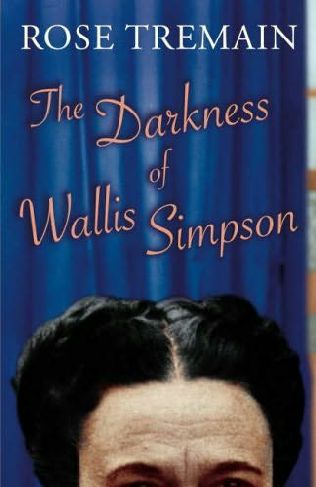
The Ebony Hand by Rose Tremain

Rose Tremain is a local author whose work I came across when I was researching the county of Norfolk, where I have lived for the past two and a half years. I have never been drawn to her work before, when working in the bookshop, but was at a loss of short stories for my challenge and this, part of The Darkness of Wallis Simpson collection, seemed appropriate.

Set in the 1950s, still in the aftermath of the Second World War, The Ebony Hand is the story of a spinster living a contented quiet existence in a small Norfolk village. She works part-time in a haberdashery shop, a quiet job that she loves, and becomes enamoured with an ebony glove hand on the counter, that she polishes and dresses with loving care. After the death of her sister from influenza, her brother-in-law checks himself into the local mental asylum; leaving their thirteen-year-old daughter, Nicolina, with no family.to take care of her. Our protagonist takes the girl in and raises her, despite knowing little about raising children, and finds her peaceful life shattered. Determined to find a good husband for Nicolina, she settles upon Paul Swinton, a good hardworking young man devoted to her niece, but she is thwarted by teenage emotions.

My favourite passage concerned Nicolina’s father, a tragic figure in his madness, fixating on the bull in the field opposite the asylum and attempting to hatch eggs on his windowsill.

“Victor was given a small room with orange curtains and a view of some water-meadows where an old grey-white bull foraged for grass among kingcups and reeds. Victor said the bull and he were ‘as one’ in their abandonment and loneliness. He said Aviva had held his mind together by cradling his head between her breasts. He announced that the minds of every living being on the earth were held together by a single mortal and precarious thing.”

Another passage perfectly describes how someone can pin their hopes on something unusual and inanimate as this ebony hand.

“When Victor said what he said about our minds being held together by peculiar things, I thought to myself that the peculiar thing, in my personal case, was this wooden hand. It was well made and heavy and smooth. I polished it with Min cream once a week. I enjoyed the way it had never aged or altered. And I began to think that this hand was like the kind of man I had to find for Nicolina: somebody who would not change or die.”

The Ebony Hand has a gentleness to it, a sweet tragedy to its main character. All her time and effort is spent on this young girl who disappoints her, but to whom she remains loyal, the faithful aunt and protector. She focuses all her hopes on this inanimate object, the ebony hand, only to have the haberdashery close and the hand sold and lost beyond her reach. It is a fragile tale, of love, loss and longing. As someone relatively new to the world of short stories, I found it charming and bittersweet.

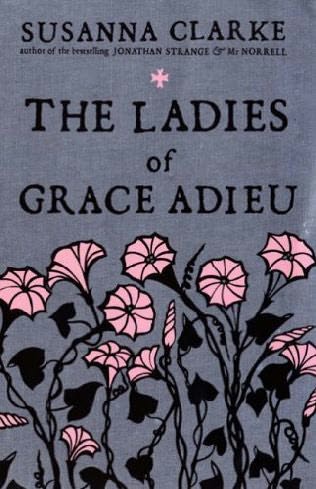
The Ladies of Grace Adieu by Susanna Clarke

"Magic, madam, is
like wine and,
if you are not used
to it, it will make
you drunk."

Those of you who have read my blog in the past may have realised that I have fallen head over heels in love with Susanna Clarke's writing. I did not cope well with Dickens at school and to this day have never finished any of his novels. Then I discover Ms Clarke, who writes like a modern day Dickens, and her fabulous book, Jonathan Strange and Mr Norrell. A mysterious journey through the Napoleonic era, following the rivalry of two magicians, and their effect on the fate of English magic. Now one of my favourite novels, and reviewed here, it left me wanting more.

The Ladies of Grace Adieu is a collection of short stories set in the same world as magic and faery as Jonathan Strange and Mr Norrell. There are eight stories, each written in the same delectable style, and each delving into a different faery story.

The Ladies of Grace Adieu is perhaps the story most reminiscent of Clarke's first novel, introducing us to a trio of female magicians and their struggle to get accepted by their male counterparts. Jonathan Strange himself makes an appearance in this glorious tale of magic, superstition and vengeful owls.

On Lickerish Hill is the tale of a sly woman who sells her daughter to a nobleman, under the proviso that in the last month of the first year of their marriage, she must spin five skeins of flax every day. The young woman, as cunning as her mother, devises a way to fulfill her husbands demands, by making a deal with a fairy. All she has to do, is discover his name, or her life will be his.

Mrs Mabb is the sad tale of a young woman who loses her love to the mysterious Mrs Mabb. Only her determination can rescue her love.

The Duke of Wellington Misplaces His Horse is an amusing story, set in Gaiman's fictional village of Wall. There in The Seventh Magpie Inn, the Duke of Wellington quarrels with a local villager over a pair of embroidery scissors and is later forced to cross the Wall to retrieve his stallion, released in spite by the angry man. There he discovers a small house where a young woman is embroidering some beautiful images of the Duke's past and possible future. When faced with his own death in gloriously coloured thread, the Duke must take matters into his own hand.

Mr Simonelli or The Fairy Widower, is a series of extracts from the diary of a young Italian man, who takes a position as cleric in a small town, where he has hopes over marrying well and creating a good home for himself. There he encounters a Fairy Widower, only to learn and discover more about his heritage and future destiny.

Tom Brightwind or How the Fairy Bridge Was Built at Thoresby is the tale of a young Jewish doctor and his fairy friend, travelling to visit a sick patient, when they come upon the poor begotten village of Thoresby. Tom is persuaded to build a fairy bridge across the river with unforeseen results.

Antickes and Frets is the tale of Mary, Queen of Scots, thrown into prison by her cousin, Elizabeth, and who ends up in the care of the Earl of Shrewsbury and his ambitious wife. She soon begins to suspect that the Countess had gotten where she was through dark means in her embroidery. Mary endeavours to use the same means to get rid of her cousin and thus usurp the throne of England.

The final story, John Uskglass and the Cumbrian Charcoal Burner, is an amusing tale of a Charcoal Burner (and his pig Blakeman!), whose life is rudely interrupted by the Raven King himself, and who enlists Saints to have his revenge on Uskglass.

Clarke's style is perfect for me. She manages to write about a world so unusual and unfamiliar to us, yet makes it so evocative and believeable that I for one, got completely sucked in. Her writing is a sheer delight to read, and I found myself having to take breaks after each short story, just as I would with a great novel, in order to really digest and enjoy the experience. My fear was that the next story would never be as good, but each was as good as the last.

A fabulous collection by a wonderful author. I cannot recommend these stories enough, and dearly hope that Susanna Clarke writes more very soon.